
Croydon moth infestation London case study
Moth infestation London | South London moth treatment | Residential pest control London | Structural pest and moisture investigation
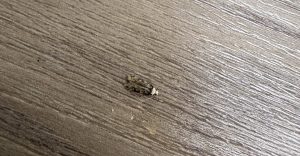
Mercury Pest Control were called out to complete a specialist moth survey at a domestic home in Croydon, South London. Upon arrival, the customer explained they believed they were dealing with meal moths (pantry moths), having spotted hundreds of flying insects every day, consistently, around their kitchen and living area.
The customer expressed how they had already paid for three separate insecticide treatments from another London pest control contractor. However, this didn’t stop the infestation and the pest issue was still ongoing.
When repeated treatment fails to stop an infestation of moths (or any insect infestation), it usually means the cause of the issue hasn’t been addressed, leaving the moths as simply a side effect of the underlying issue.
Why three previous insecticide treatments failed to work
During our initial inspection, we identified adult moths flying in the kitchen area. We identified crucially that these weren’t just standard pantry moths at all. Instead, we identified them as two distinct species: white-shouldered house moths and pale-backed moths. This was our first clue as these moths are not as strict as pantry moths on their food source. Meaning, it may not be dry foods or pantry-related items where the infestation originated.
After checking the obvious spots; dry food stores, carpets, rugs, furniture and pantry shelves, we failed to find their active breeding sources. That told us we needed to look deeper into the structure of the building. While these species can feed on natural fabrics, our previous experience at Mercury Pest Control has shown us these types of moths can also be linked to mould residue which can be caused by hidden water leaks.
The property had undergone extensive kitchen and living room renovations and refurbishment work around 12 months prior to the moths appearing. The customer mentioned there had been issues with water ingress during the building work. Although they had been assured everything had been fixed, they suspected a few corners might have been cut along the way.
Phase 1: Discovering the moth infestation source
To find out what was really going on, we ran a fibre optic camera through the rear airbrick voids. The footage confirmed that heavy moth activity and damp debris were hidden directly beneath the floorboards. A further drainage and structural survey showed the main pipework was fine, but defects were spotted by us in the external brickwork where an old toilet had been removed, letting rainwater soak straight under the property.
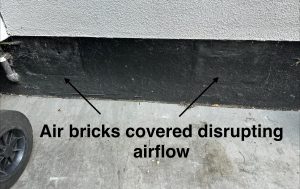
On top of that, the front airbricks had been meshed and painted over during the renovation, resulting in natural airflow being completely blocked. To make matters worse, a 2-inch kitchen waste pipe was actively leaking beneath the house.
All these issues combined created a dark, humid cavity filled with moisture and damp which led to an ideal breeding environment for moths.
Phase 2: Subfloor treatments and restoring ventilation
Fibre optic camera inspection revealed issues left from previous renovation works. We found leaking pipes, trapped moisture, blocked airbricks, limited airflow and subfloor timber decay.
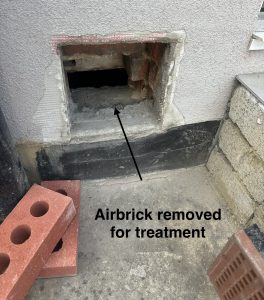
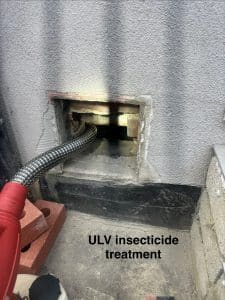
To quickly bring the high activity levels under control, we removed the external air bricks at the rear of the house and applied a targeted insecticide treatment under the property using ULV fogging. This creates a fine mist that reaches deep into floorboard gaps and structural voids, knocking down active adult moths and larvae on contact.
At the same time, we stripped away the painted mesh covers from the front airbricks. This reopened passive airflow across the building and help the subfloor begin to dry out. Removing the moisture and drying out the subfloor area was the first step in removing the environment the moths had bred and lived in for so long.
Final Phase: Complete eradication of moth infestation and long-term relief
Following the application of insecticide, the repairing of leaks, the restoring of ventilation, and the application of targeted subfloor treatments, the infestation was completely removed and neutralised by Mercury Pest Control.
We returned to the residence and a follow-up check confirmed that flying moth activity had stopped entirely.
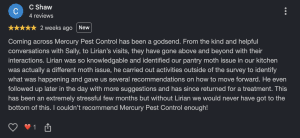
Meanwhile, the customer has since reported no further sightings and kindly left us a 5-star review on Google.
Overall, they were delighted that an issue which had stumped previous pest controllers was managed to be gotten to the bottom of by us / Overall, they were delighted that the bottom of an issue that had stumped previous pest controllers was successfully reached by us.
Preventing moth and damp pest issues in London properties
Moths, carpet beetles, flies and other persistent insect pests are often signs of hidden structural problems. Therefore, standard surface spraying won’t fix an infestation if insects are breeding in damp cavities under your feet. Proper diagnostic surveys are essential to protect your property, the first time.
So, if you are experiencing:
- A persistent moth infestation in Croydon or South London
- Unexplained flying insects near kitchen units or skirting boards
- Recurring pest issues after previous treatments have failed
- Pest problems linked to damp, high humidity, or recent building works
Mercury Pest Control delivers professional pest management, betting to the root cause of the issue and resolving it for good.
Contact Mercury Pest Control today. 📞 Call: 0208 166 5110
📩 Email: info@mercurypestcontrol.co.uk
📍 Serving businesses and residents across all London and Surrey postcodes | London & Surrey Pest Control. Over 100 Google reviewers rate Mercury Pest Control 5 stars. Protect your home, trust the experts.